Why compressor type matters more than brand
Many businesses begin their search by asking a simple question: What is the best air compressor brand? It sounds logical, but in practice, the brand is rarely the most important factor. The real starting point is the type of compressor and the application it will support.
Different compressor technologies are designed for different workloads. A system that performs well in a small workshop may struggle in a production facility that runs around the clock. Selecting the right compressor type ensures the equipment delivers the airflow, pressure, and reliability your operation requires.
Industrial compressed air systems are commonly built around four main technologies:
- Piston compressors are suited to intermittent use, such as small workshops or maintenance areas.
- Rotary screw compressors designed for continuous operation in manufacturing and industrial environments.
- Oil-free compressors are used where air purity is critical, including food processing and pharmaceutical production.
- Variable speed compressors are built for facilities where air demand changes throughout the day.
Each of these compressor technologies serves a different purpose. Understanding how each type works is the first step in selecting the right air compressor for your application.
Piston air compressors
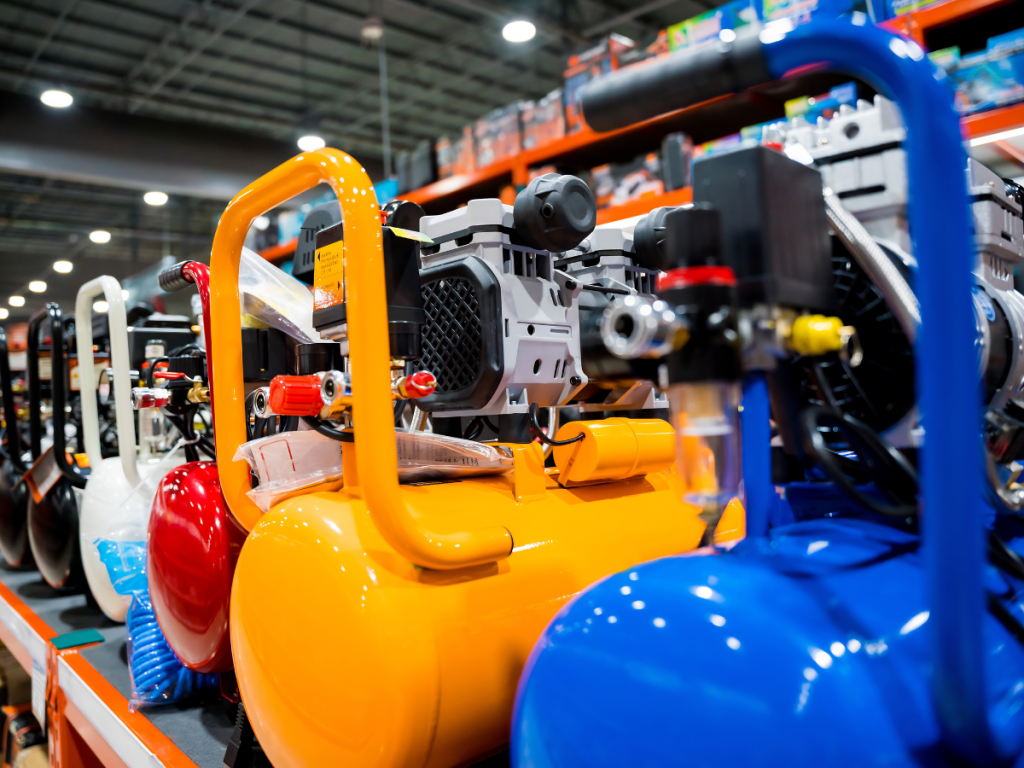
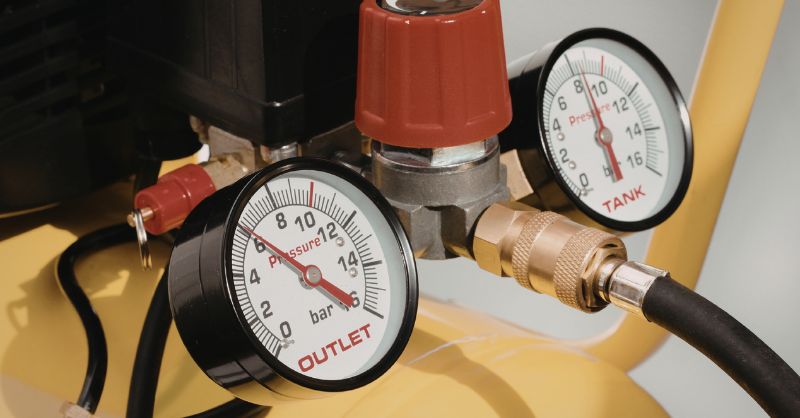
Piston air compressors, also known as reciprocating compressors, remain a common choice in smaller workshops and operations where compressed air is not required continuously. These systems use a piston driven by a crankshaft to compress air inside a cylinder, storing the pressurised air in a tank for later use.
Because they operate in cycles rather than running continuously, piston compressors are well-suited where tools are used intermittently. Many workshops and maintenance teams rely on this design because it is straightforward to maintain and capable of delivering high pressure when required.
Typical applications
Piston compressors are frequently used where compressed air demand comes in short bursts rather than constant production use.
Common applications include:
- Automotive workshops
- Small fabrication shops
- Maintenance departments
- Backup compressors in industrial facilities
In these settings, compressed air may be needed for inflating tyres, running air tools, cleaning equipment, or supporting occasional workshop tasks.
| Advantages | Limitations |
|
|
Well-known manufacturers
Several manufacturers have built strong reputations producing piston air compressors used in workshops and industrial maintenance environments.
Many of these compressors require regular servicing and replacement of wearing parts such as air filters, oil filters, valves, and gaskets. Using reliable OEM equivalent parts helps maintain compressor performance whilst controlling maintenance costs.
Rotary screw air compressors
Rotary screw compressors are widely used in industrial environments because they are designed to run continuously and deliver a steady supply of compressed air. Instead of using pistons, these compressors rely on two interlocking rotors that compress air as it moves through the system. This design allows them to operate smoothly over long periods without stop-start cycles.
For facilities that rely on compressed air to support production equipment, rotary screw compressors often provide the reliability and airflow consistency required to keep operations running.
Typical applications
Rotary screw compressors are commonly used in industries where compressed air is required throughout the working day.
Typical environments include:
- Manufacturing plants
- Food processing facilities
- Packaging operations
- Construction and mining sites
- Industrial automation systems
In these settings, a continuous air supply is essential to avoid interruptions.
| Advantages | Limitations |
|
|
Well-known manufacturers
Several manufacturers are recognised globally for producing rotary screw compressors used in industrial operations.
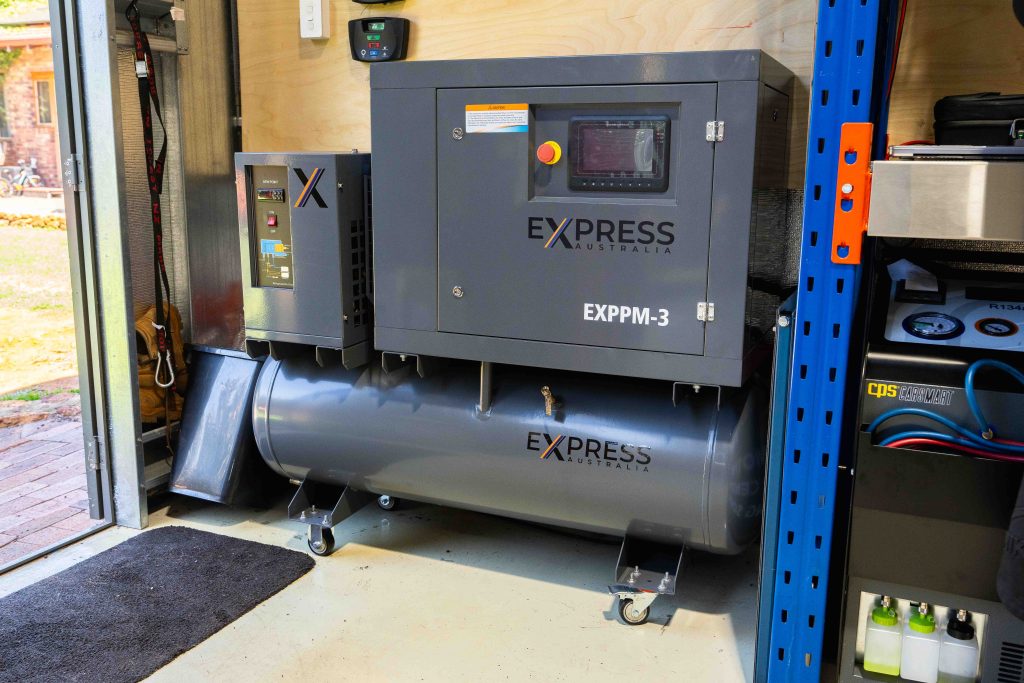
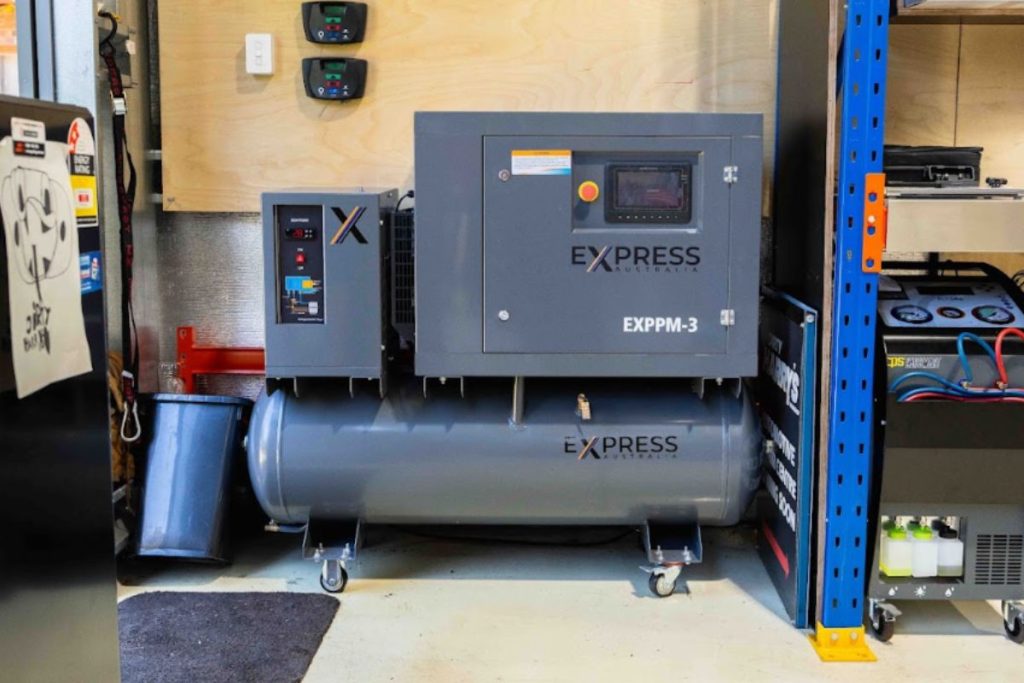
- Express Screw Compressors
- Atlas Copco
- Kaeser
- Ingersoll Rand
- Gardner Denver
- Hitachi
- Sotras
- Sullair
- Xinlei
When evaluating rotary screw compressors, operating cost is an important consideration. Electricity consumption represents a significant portion of the lifetime cost of a compressed air system.
Contact the team at Express for more information on our screw compressors today!
Oil-free air compressors
Oil-free air compressors are designed for applications where compressed air must remain free from oil contamination. In these systems, the compression process occurs without oil inside the compression chamber. This prevents oil particles from entering the air stream and affecting sensitive products or processes.
In many industries, air purity is not just a quality preference. It is a regulatory requirement. When compressed air comes into contact with products, packaging, or sterile equipment, even small amounts of oil contamination can create compliance issues or product defects.
Typical applications
Oil-free compressors are commonly used in industries where air purity directly affects product safety or manufacturing quality.
Typical environments include:
- Food and beverage production
- Pharmaceutical manufacturing
- Electronics manufacturing
- Medical air systems
In these settings, compressed air may come into direct contact with products, ingredients, or sterile equipment.
| Advantages | Limitations |
|
|
Because of these factors, oil-free compressors are usually selected when air purity requirements outweigh the additional cost.
Well-known manufacturers in this category
Several manufacturers specialise in oil-free compressor technology used in industries with strict air purity requirements.
These manufacturers produce oil-free compressor systems designed to meet strict air quality standards whilst supporting reliable industrial operation.
Variable speed air compressors
Variable Speed Drive (VSD) compressors adjust the speed of the compressor motor to match the amount of compressed air required at any given time. Instead of running at full capacity continuously, the system automatically increases or decreases output based on demand.
This approach helps reduce energy waste and maintain a more stable system pressure, particularly in facilities where compressed air usage changes throughout the day.
In many compressed air systems, demand is rarely constant. Machines start and stop, production lines change, and air tools operate intermittently. A variable-speed compressor can respond to these fluctuations without the inefficiencies associated with fixed-speed systems.
Typical applications
Variable speed compressors are often used in facilities where compressed air demand varies during normal operations.
Common applications include:
- Facilities with variable production schedules
- Plants where air demand changes throughout the day
- Energy-efficient manufacturing operations
In these environments, a compressor that can adjust its output automatically helps maintain consistent pressure while reducing unnecessary energy use.
| Advantages | Limitations |
|
|
Correct system sizing and professional installation are important to ensure the compressor delivers the expected performance and efficiency benefits.
Well-known manufacturers in this category
Several manufacturers produce variable-speed compressor systems designed for industrial applications.
Parts availability and ongoing maintenance
Regular maintenance keeps any air compressor operating reliably. Components such as filters, valves, belts and gaskets wear over time and must be replaced to get the most out of your air compressor.
At Express Australia, we supply OEM equivalent spare parts for many popular air compressor brands used across Australia.
Our range supports different types of compressors, including piston and industrial rotary screw units, helping businesses maintain the right air compressor for powering pneumatic tools, spray guns, grinders, and other workshop equipment.
Get in contact with our team today for friendly advice and reliable service.