A compressor thermostatic valve controls oil temperature in an oil-injected rotary screw compressor. It decides how much oil flows through the oil cooler and how much bypasses it. That small job has a direct effect on oil life and uptime. When the valve sticks, the result is either high-temperature shutdowns or water in the oil.
What is a thermostatic valve?
A thermostatic valve is a self-acting, temperature-sensitive valve in a compressor’s oil circuit. It needs no power supply or controller input. Parts lists also call it a thermal valve, thermostat valve or oil temperature control valve. Depending on the model, it may be a separate housing or sit inside the oil filter head.
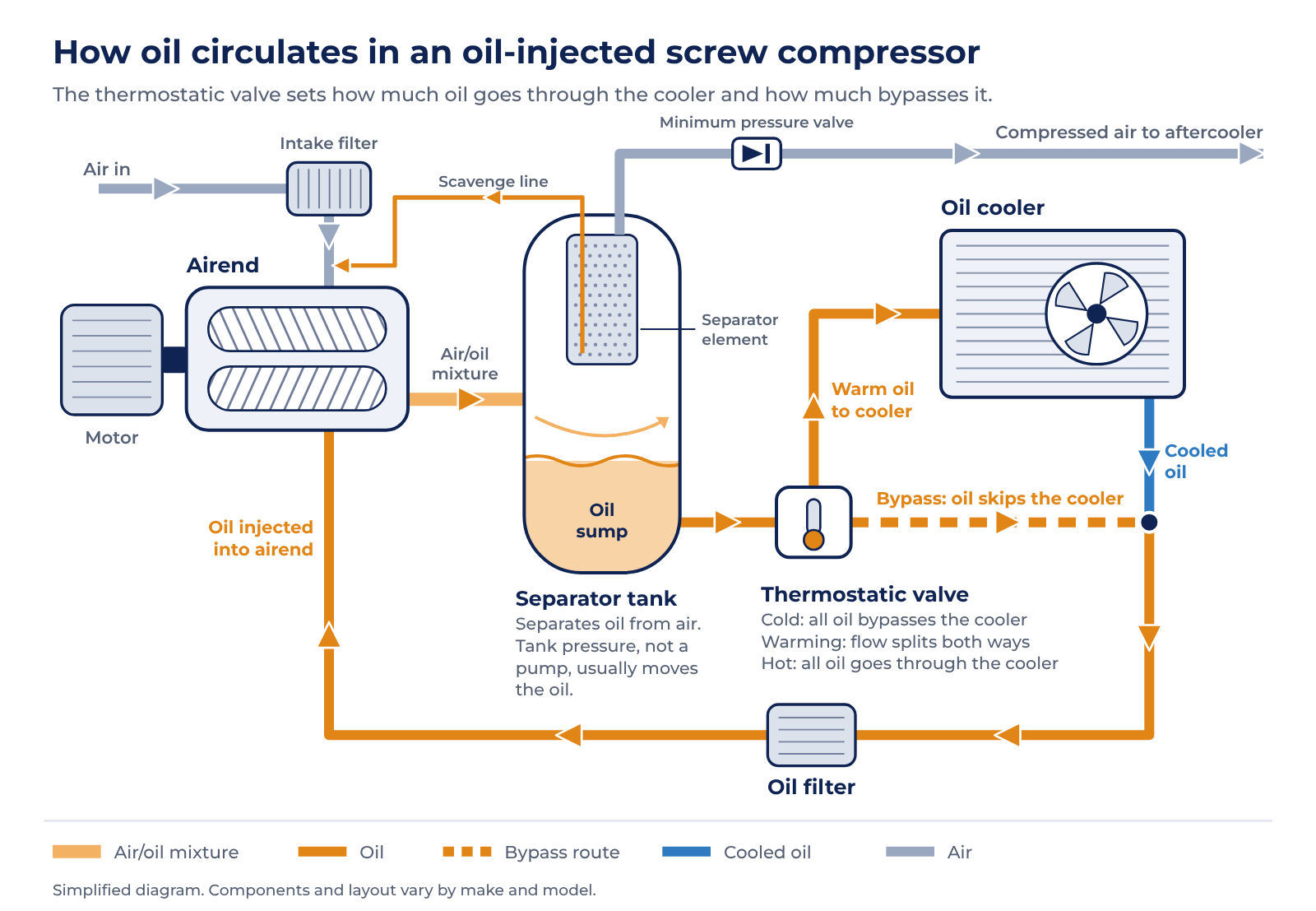
In an oil-injected screw compressor, oil seals the rotors and lubricates the bearings while absorbing the heat of compression. From the airend, the oil travels to the separator tank, then returns through the oil cooler and oil filter. The thermostatic valve sits on that return path and sets how much oil goes through the cooler.
How a thermostatic valve works in an air compressor
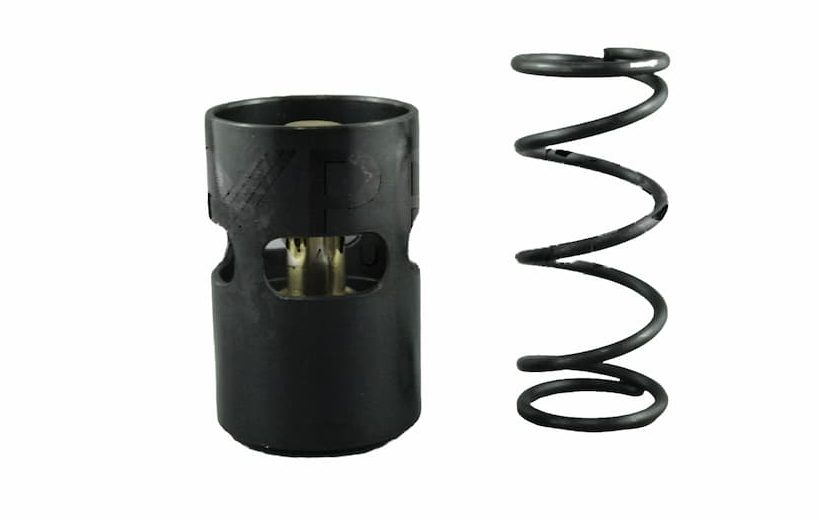
Inside the valve is a wax element: a sealed capsule of wax that expands as it heats. As the wax expands, it pushes a sleeve or piston that opens the port to the cooler and closes the bypass. When the oil cools, a return spring moves the valve back.
A typical operating cycle runs like this:
- Cold start. The cooler port stays closed. Oil bypasses the cooler and returns straight to the airend, which brings the compressor up to temperature quickly.
- Warm-up. At the element’s rated temperature, the valve starts to open and sends part of the oil through the cooler.
- Normal running. The valve modulates, blending cooled and hot oil to hold a steady injection temperature as load and ambient temperature change.
- High load or a hot day. The valve opens fully, and all oil passes through the cooler. If that still is not enough, the controller trips the compressor on high temperature.
Opening temperatures vary by model, from 55°C to above 70°C. Always match the part number, as the wrong element pushes oil temperature too low or too high.
Why oil temperature matters for compressor performance
Compressor oil has to stay within a fairly narrow band. Below it, water condenses into the oil. Above it, the oil breaks down.
When oil runs too cold
Compressing air squeezes its water vapour into a smaller volume, which raises its dew point. If oil in the separator tank runs below this pressure dew point, water condenses into it. Emulsified, milky oil lubricates poorly and leaves rust on bearings and rotors. It also forms sludge that shortens oil separator life.
Compressors that run lightly loaded or cycle often in humid conditions, such as Australia’s tropical north, carry the highest risk. A valve stuck open to the cooler is a common cause.
When oil runs too hot
Heat speeds up oil oxidation. Oil analysis lab Fluid Metrics notes that oxidation rates double, and oil life halves, for every 10°C (18°F) rise above the oil’s rated temperature. Hot oil also thins out, which weakens the seal between the rotors and cuts the air the airend delivers for the same power.
A valve stuck in bypass overheats a compressor quickly, even with a clean cooler. On sites in the Pilbara and Goldfields, where summer days above 40°C are common, the valve can sit fully open for hours. Dust-clogged cooler fins then leave little margin before a shutdown.
Signs your compressor thermostatic valve is failing
Over time the wax element wears, and varnish or debris can make the valve stick. Watch for:
- High temperature alarms or shutdowns with a clean cooler and correct oil level
- Slow warm-up, or a compressor that runs cooler than normal
- Milky oil, or water in oil analysis results
- Discharge temperature that swings instead of holding steady
- Oil leaking around the valve housing
A blocked cooler or faulty temperature sensor can cause the same symptoms. Checking the valve early avoids replacing parts that still work. Our guide to common industrial air compressor issues covers the other causes.
How to check and replace a thermostatic valve
Take temperature readings with the compressor running, but never open the oil circuit until the machine is isolated, depressurised and cool. Hot oil under pressure can cause serious injury.
- Check the controller. With the compressor warm and loaded, compare the oil temperature with the normal range in the operator manual.
- Compare cooler temperatures. Use an infrared thermometer on the oil lines into and out of the cooler. A cool inlet line while discharge temperature climbs points to a valve stuck in bypass.
- Inspect the element. With the compressor isolated and cool, remove the element and check it for varnish and hardened O-rings.
- Test it. Heat the element gradually in water and watch for movement near its rated temperature. If it does not move, replace it.
Replace the element at the interval in your manufacturer’s service schedule, and after any overheating event, as excess heat damages the wax. A major service, with the oil circuit already drained, is the easiest time to do it. Adding the valve to your preventive maintenance checklist keeps it from being missed.
Find the right thermostatic valve for your compressor
Express Australia stocks genuine, aftermarket and OEM equivalent thermostatic valves, elements and kits for Atlas Copco, Ingersoll Rand, CompAir and Gardner Denver compressors. Browse our range of thermostatic valves or search by part number.
If you cannot find your part, submit an enquiry with your compressor model and we will get back to you within one business day. You can also call our team on 1300 446 944. We ship Australia-wide from our Perth warehouse, with free shipping on orders over $250.